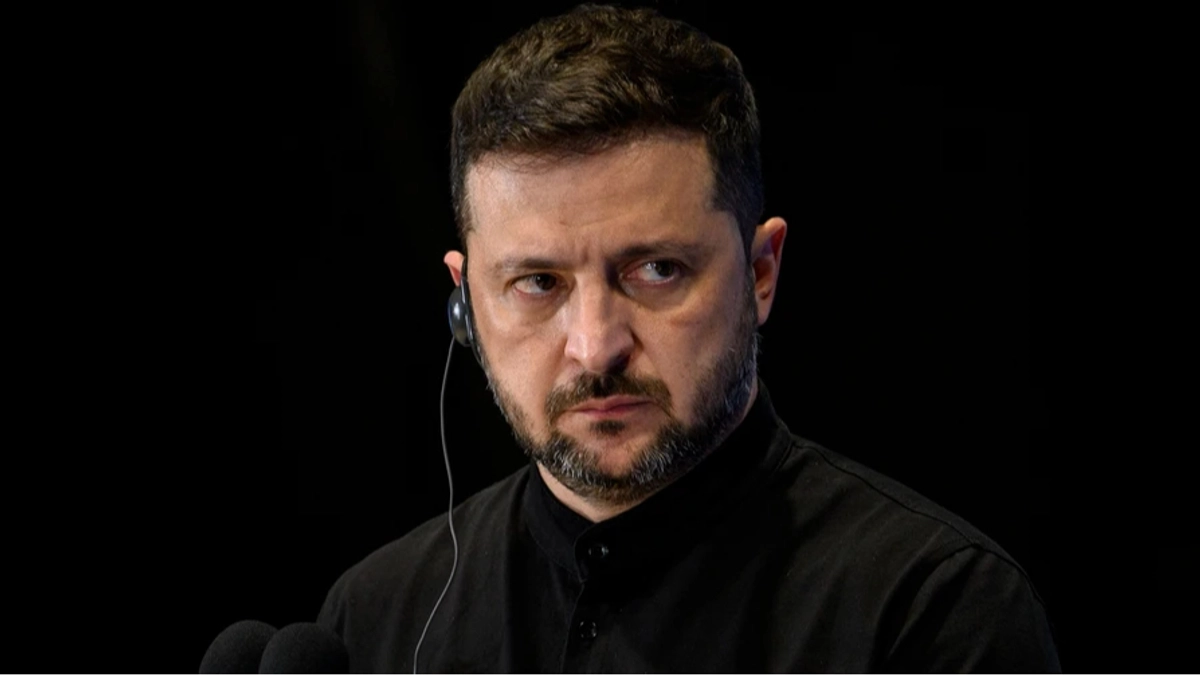
A high-stakes diplomatic standoff has emerged over Ukraine’s ongoing campaign of long-range drone strikes against Russian oil infrastructure. Amid repeated pressure from Washington to cease the operations—driven by concerns over global energy market volatility and rising fuel prices—Ukrainian President Volodymyr Zelenskyy has publicly articulated a clear counter-offer: Kyiv will pause its targeted attacks on Russian refineries, but only if the United States supplies the air defense interceptor missiles needed to safeguard Ukraine’s own grid and population.
The strategic posture highlights the operational pressures facing Ukrainian commanders as winter approaches. With Russia consistently targeting civilian power grids, heating facilities, and municipal utilities, Ukraine has increasingly used long-range strike capabilities to strike deep inside Russian territory, aiming at the refining capacity that fuels Moscow’s military economy and supplies its export market.
The Logic of Counter-Strikes
Speaking on American television, Zelenskyy detailed recent discussions with U.S. leadership regarding the strike campaign. Addressing objections from Washington, he emphasized that Ukraine cannot simply absorb systemic attacks on its domestic power network without delivering a proportional response against Russian critical assets.
According to Zelenskyy, Kyiv presented two conditions under which it would consider calling off the drone strikes. The first would require a bilateral cessation of attacks targeting energy infrastructure altogether. The second—and more immediate operational demand—is a dedicated resupply of U.S.-made Patriot air defense interceptors, even if limited to a single month of defensive operations.
"We said that if you want us not to attack Russia's refineries, they have not to attack our energy system," Zelenskyy noted. "And other alternative – give us Patriot missiles, we will find money, not just aid. Yes, just deliveries and we will pay for it."
He added a straightforward timeline for the proposal, stressing the urgency of protecting urban centers and electrical infrastructure against incoming cruise and ballistic missile salvos: "For one month, if you need us not attack their refineries, for one month, give me Patriot missiles for one month."
Defense Shortages and Strategic Dilemmas
The proposal puts standard air defense stockpiles under a bright light. Patriot system interceptors—particularly the advanced PAC-3 variant designed to destroy incoming ballistic missiles—are in high demand globally and feature lengthy manufacturing cycles. European allies and American military planners have had to balance immediate Ukrainian battlefield requirements against their own strategic reserves and regional deterrence commitments elsewhere.
Observer responses to the high-stakes proposal have reflected the tactical tension facing Western allies and battlefield planners alike:
"Good one on the part of Zelenskyy... Ukraine start hitting refineries again and put onus on Trump if he want Ukraine to stop refinery attack give Ukraine means to defend itself from Russian missiles."
Others noted the industrial realities constraining missile supply chains, arguing that inventory levels are already stretched thin:
"The interceptors Zelensky seeks don’t even exist. The US probably has around 100 total PAC-3’s that are needed in case China invades Taiwan in a year."
Yet another perspective questioned whether industrial output could be scaled up to meet the strategic crisis:
"There is apparently a shortage after the Iran strait of hormuz fiasco... My own view is that the US is blessed. It has huge demand for the missiles in Ukraine, enough to fund a factory with an annual output of 3000 missiles or more. So it needs to get Ukraine through its current crux."
Pressure Across the Diplomatic Front
The push to curb Ukrainian refinery strikes has been a recurring feature of recent international talks. Diplomatic efforts in Oslo and earlier bilateral meetings in October highlighted persistent friction between Western priorities—focused on stabilizing international crude markets—and Ukrainian defensive necessities.
When asked whether presenting such firm terms might be viewed in Washington as political leverage, Zelenskyy demurred, stating that direct communication is necessary when national survival is at stake. From Kyiv’s point of view, restricting Ukraine's ability to strike Russian economic targets without offering full-scale defensive coverage against Russian missile bombardments leaves the country exposed to asymmetric damage.
As discussions over weapons deliveries and energy security continue, the core dilemma remains unresolved. Without formal guarantees or accelerated missile shipments to secure the Ukrainian skies, long-range drone strikes on Russian petroleum facilities are poised to remain a primary element of Kyiv's broader defense strategy.

