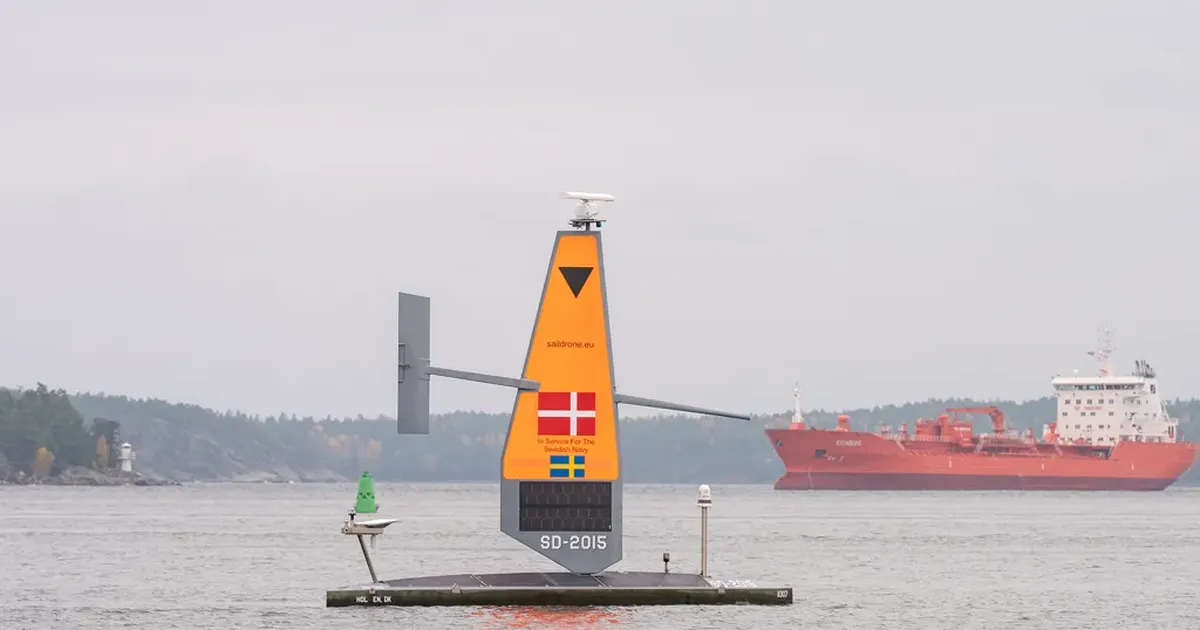
The Swedish Navy has entered into an agreement with a private U.S. defense firm to deploy unmanned surface vessels for maritime surveillance in the Baltic Sea. Announced by Sweden’s defense procurement agency, the one-year contract introduces four roughly 33-foot Voyager vessels equipped with radar and cameras to monitor shipping lanes and regional waterways around the clock.
Under the arrangement, the Swedish military retains operational control by assigning missions and receiving collected data directly at its command center, while company personnel maintain the hardware and oversee autonomous operations. The initiative is intended to alleviate routine monitoring demands on crewed naval assets, allowing larger patrol ships to focus on more complex tasks that require direct human intervention, such as boardings and inspections.
The deployment aligns with broader regional efforts, including NATO's Task Force X Baltic initiative and Operation Baltic Sentry, which focus on securing critical undersea infrastructure. Similar civilian and commercial drone surveillance models have previously been utilized by the European Maritime Safety Agency and neighboring Nordic countries to support coast guard duties, environmental monitoring, and search-and-rescue operations.
While the program offers a cost-effective way to extend persistent surveillance without tying down larger vessels, the decision to engage an external commercial provider has drawn varied reactions from observers weighing regional security dynamics.
Some expressed skepticism over relying on external entities for critical monitoring, questioning the strategic wisdom of the partnership. Conversely, others defended the arrangement as a practical trial for evaluating new technology. As one observer noted, "I think it is smart to hire company for 1 year to see if the remote monitoring idea even works in practice and if it does- build your own system."
Others pointed to potential geopolitical layers behind the deployment, suggesting that utilizing foreign assets in sensitive waters could alter risk calculations for potential adversaries. Another participant remarked, "Given this is just four USVs I suspect it's so that if the Russians do shoot at or damage one, they've just cost America money. In the current climate, that seems to be the only thing the US cares about."
The one-year trial period will allow defense planners to assess the operational value of the autonomous craft before deciding on long-term integration into the nation's maritime defense infrastructure.

