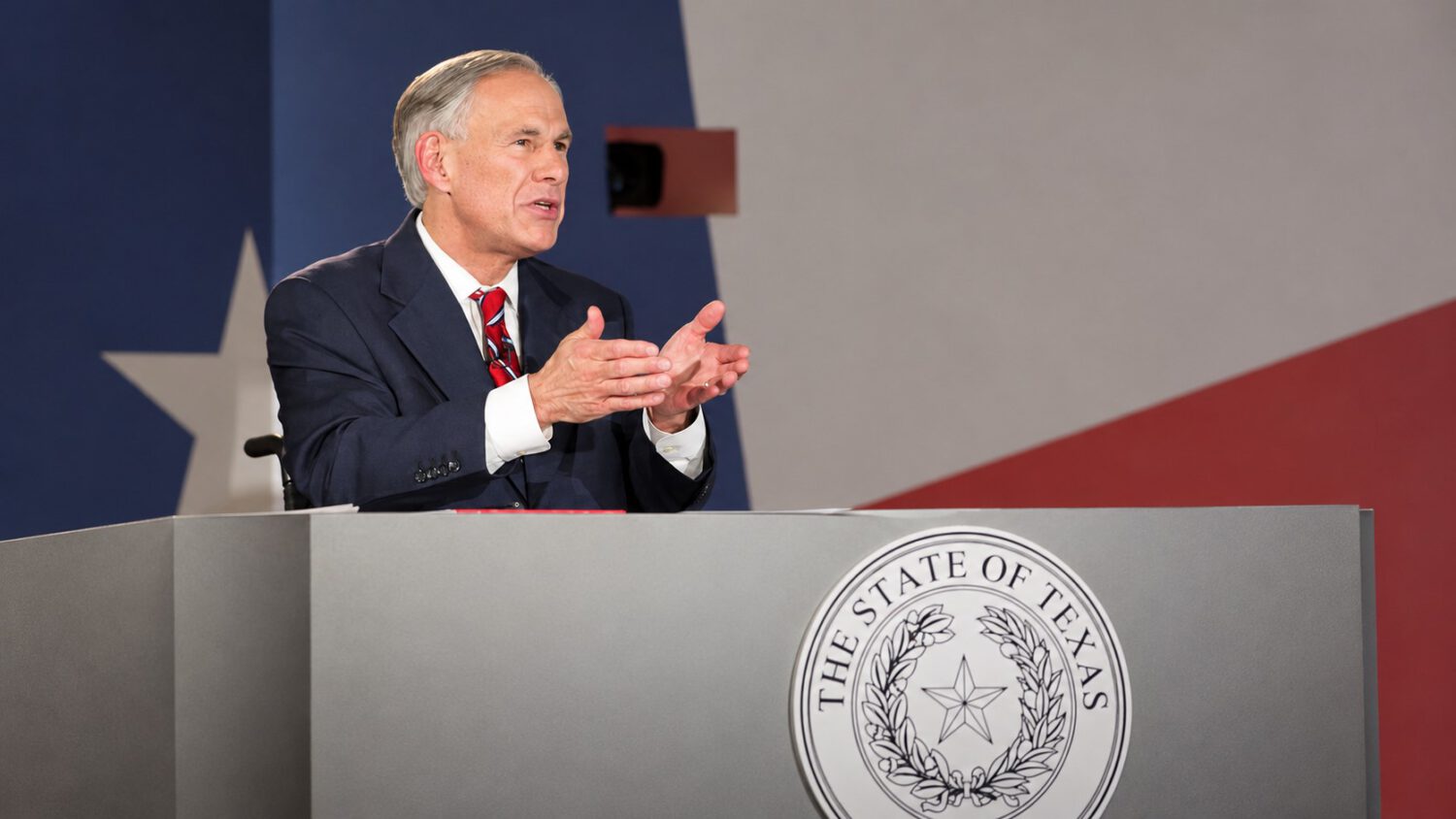
When state leaders announced a pause on grid approvals for new data centers while urging an end to major tax incentives, the message was framed around protection. The booming digital infrastructure sector—spurred by rapid advancements in artificial intelligence and cloud computing—was placing visible strain on regional power grids and raising serious questions about heavy water consumption. Policymakers cast themselves as defenders of local communities, promising to rein in unrestrained industrial demands.
However, public financial disclosures revealed a complex layer behind the policy debate: millions of dollars in campaign contributions flowing from the very industry under scrutiny directly to state decision-makers. In one high-profile instance, an analysis of campaign filings showed that Texas Governor Greg Abbott collected approximately $9 million from data-center-related contributors—representing roughly 13 percent of his total fundraising during the analyzed timeframe.
Following the Financial Trail
The financial influx spans direct industry players as well as adjacent businesses. Reports categorize $4.9 million of the total as coming from donors tied directly to data-center development, operation, or ownership, with another $4.1 million originating from affiliated sectors like specialized equipment suppliers, technology firms, and private investment entities.
Major individual contributions accounted for significant portions of the total. Notable donations included $1.5 million from technology investor Joe Gebbia, $1 million combined from Rhett Bennett and energy firm Black Mountain, $500,000 from Elon Musk, and $250,000 from real estate developer Harlan Crow.
The timing of these contributions aligned closely with key policy milestones. Industry-connected donors contributed $1.5 million around the time initial regulatory proposals were articulated, followed by an additional $2.8 million in the month following the announced pause on grid approvals.
Observers of state governance note that high-stakes donors often aim to ensure their perspective is represented during critical legislative drafting phases. Political analysts suggest that major commercial interests typically seek a predictable, negotiated regulatory outcome rather than outright bans or hostile legislative mandates.
"Taking 9M then writing the rules is a bad look. I'd like to see the donor list and what the regs actually say."
Defense and State-Wide Scope
In response to scrutiny surrounding campaign contributions, official statements from regulatory leaders maintain that campaign donations do not alter public policy positions. Proponents of the current approach emphasize that state guidelines will continue to require data centers to cover their own infrastructure expansion costs, minimize localized impacts on residential utility rates, and secure independent resources for operational cooling.
Campaign representatives have characterized public focus on contribution figures as an effort to manufacture political controversy out of standard, publicly disclosed financial reports.
Yet the concentration of industry fundraising extends across multiple levels of state governance ahead of upcoming legislative sessions:
- Lieutenant Governor's Office: Campaign disclosures indicate over $1.6 million received from donors connected to digital infrastructure and energy supply networks.
- House Leadership: Key legislative leaders received prominent donations, including contributions linked to high-tech manufacturing and technology sector executives.
- Comptroller Race: Campaign financial reports show approximately $1 million from indirect stakeholders, alongside substantial primary election spending by technology-focused political action committees.
"Stargate in Abilene will use the equivalent of 750,000 4 bedroom homes in the summer once they bring all eight halls online."
"Regulation in Texas requires the data center to generate its own power. Natural gas steam generators are the common option."
Infrastructure Demands and Community Impact
At the heart of the regulatory debate is the raw consumption required by modern hyperscale data facilities. Facilities housing thousands of high-performance computing clusters demand immense electric capacity to operate constantly, alongside cooling systems that rely heavily on municipal water reserves or dedicated industrial wells.
Residents and local utility boards have voiced concerns over potential consumer cost shifts. If power producers build new transmission lines or generation plants to accommodate large industrial users, ratepayers often wonder how much of that capital expenditure will eventually appear on standard residential electric bills.
"It's a big club and you ain't in it."
As state lawmakers prepare to deliberate on grid connection rules, water rights, and sales-tax exemptions, the central challenge remains balancing industrial growth against local resource constraints. While massive campaign contributions do not automatically equate to policy concessions, they underline the immense economic stakes involved as regulators write the rules for the state's digital future.

